ServicesEnergy Efficient Windows
Energy Efficient Windows in Cerritos
We find out why a room runs hot or drafty before we specify a single window. Then we match the low-E coating, gas fill and frame to that cause, so your new glass cuts heat gain and air leaks where they actually start.
What makes a window energy efficient
An efficient window is a system, not just a second pane. Two numbers on the NFRC label tell most of the story: the U-factor, which measures how fast heat moves through the whole unit, and the solar heat gain coefficient (SHGC), which measures how much sunlight passes through as heat. Lower is better on both for a home in Southern California.
Those numbers come from specific parts. A low-E coating, a microscopically thin metal oxide layer on the glass, reflects infrared heat while letting visible light through. Argon gas between the panes slows heat transfer better than air. Warm-edge spacers and insulated vinyl frames stop the edges from acting as a thermal bridge, which is where old aluminum frames lose most of their performance.
We are CSLB C-17 licensed, and our installers bring 30 years of window installation experience to sorting out which of those parts matters most in your rooms.
What our energy efficient window work includes
A room-by-room heat check
We note which walls face west and south, where drafts come in, and whether the problem is the glass, the frame or the gap around it. That tells us what to replace and what to leave.
Glass specified by exposure
A west-facing bedroom may need a low-SHGC coating that a shaded north window does not. We spec each opening on its own instead of putting one package on every wall.
Dual-pane, argon-filled units
Insulated glass units with warm-edge spacers and argon fill, set in multi-chamber vinyl frames that do not conduct heat the way bare aluminum does.
Air sealing at the opening
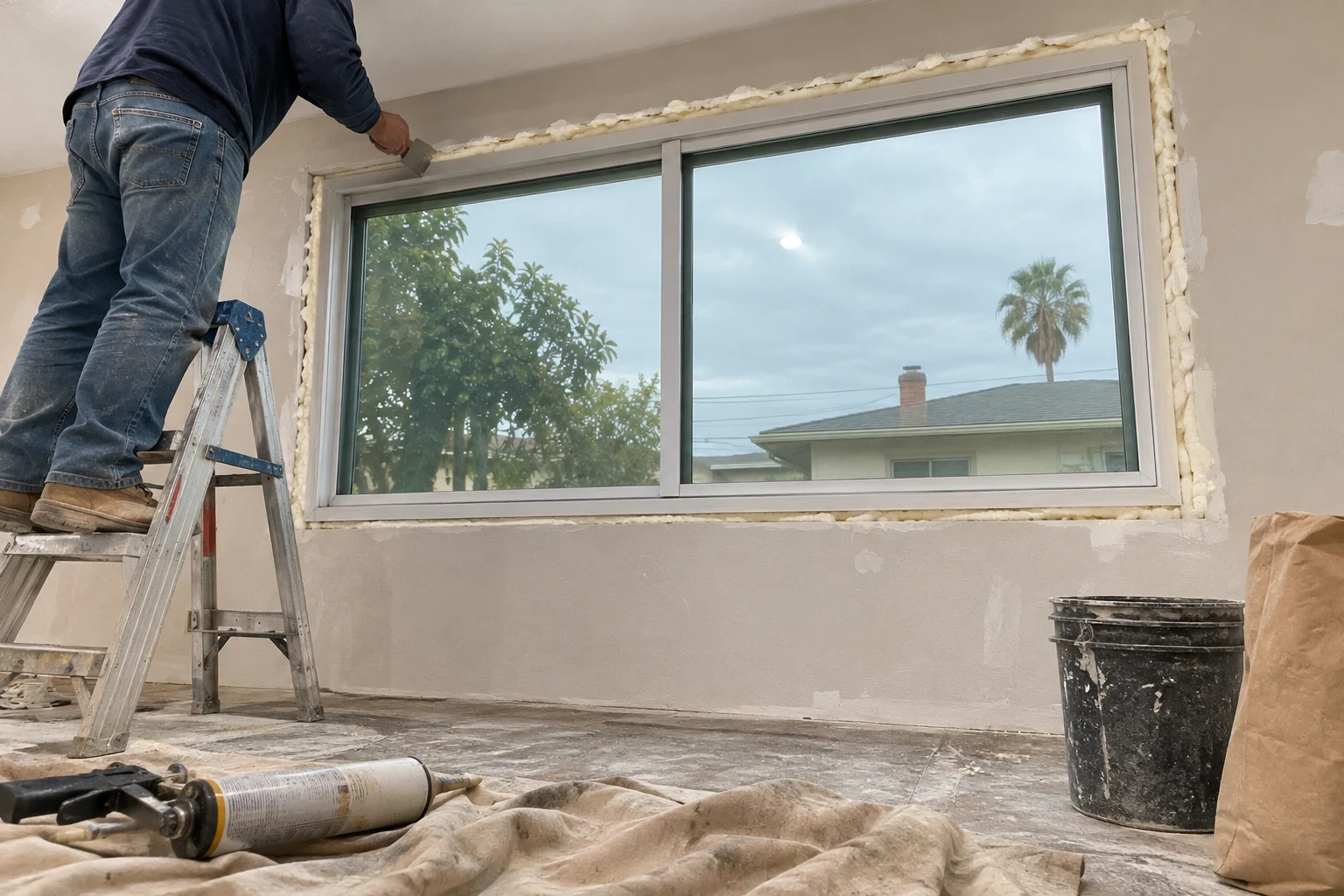
A tight window in a leaky opening still loses air. We seal between the new frame and the wall with low-expansion foam and exterior sealant so the rated performance holds once it is installed.
Title 24 compliance and permit
California's Title 24 energy code sets maximum U-factor and SHGC values for replacement windows. We order units that meet them and pull the permit where the city requires one.
Signs your windows are costing you comfort
- One room is always hotter
- If a single room heats up every afternoon, the cause is usually solar gain through clear glass. A low-SHGC coating addresses that directly.
- Fog between the panes
- Moisture inside a dual-pane unit means the edge seal has failed. The insulating gas has already leaked out, and the unit now performs close to single pane.
- Frames hot or cold to the touch
- Aluminum frames from the 1960s and 1970s conduct heat straight through. If the frame feels warm in summer, it is passing that heat into your home.
- Drafts at the sash
- Worn weatherstripping and loose sliders let air move past the glass. You often feel it at the meeting rail or along the bottom track.
- Faded floors and furniture
- Ultraviolet light fades wood, fabric and rugs. Most low-E coatings block the bulk of UV along with infrared heat.
How a project runs
- 1
In-home assessment
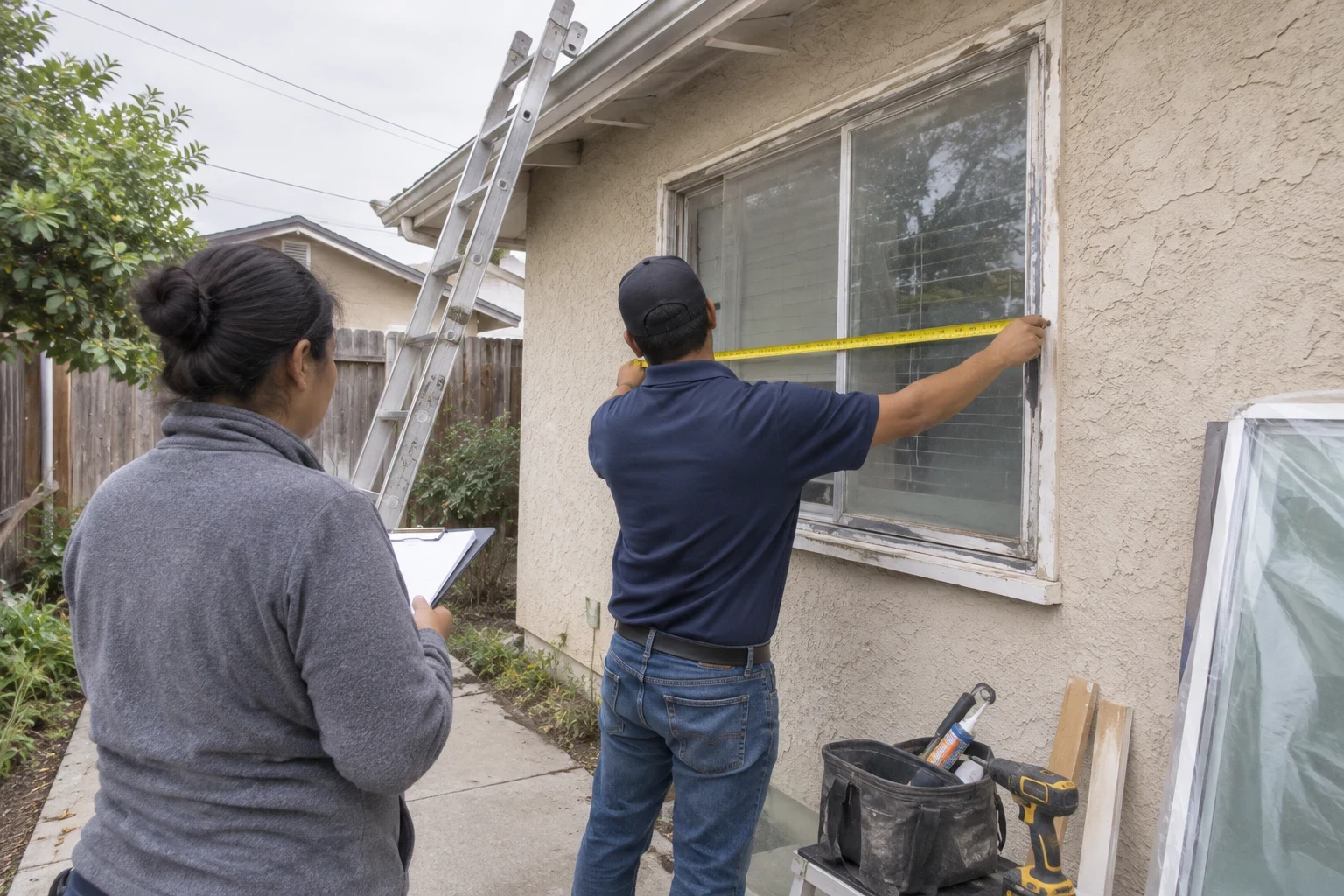
We look at orientation, frame material, seal condition and air leakage at each window, and measure every opening. You hear what we think is causing the discomfort and why.
- 2
Written specification and quote
Your quote lists each window with its frame, glass package, U-factor and SHGC, so you can see exactly what each opening gets and compare it fairly.
- 3
Installation day
We cover floors and furniture near the work, remove the old units, install and level the new frames, then seal and finish the opening inside and out. Most homes stay livable throughout, with only a few openings open at once.
- 4
Check and cleanup
We test each sash for smooth operation and a full seal, remove the old windows and debris, and leave the NFRC labels on the glass for the inspector.
What moves the price
Efficient windows are priced per opening, and the glass package is only part of it. The size, the frame material and how the old unit comes out all change the number. Your written quote shows each of these line by line.
- Glass package
- Standard low-E with argon costs less than triple pane or specialty solar-control coatings. We only suggest the upgrade where the exposure calls for it.
- Window size and style
- Large picture windows and custom shapes need bigger insulated glass units and more labor than a standard slider.
- Installation method
- A retrofit insert into the existing frame is less invasive than a full frame removal. Damaged framing or stucco around the opening adds work. Our Window Retrofitting page explains the difference.
- Number of windows
- Doing the whole house at once spreads setup and permit costs across more openings than replacing one or two at a time.
Energy efficient window questions
- Is triple pane worth it here?
- Usually not for most homes in our area. Triple pane shines in cold climates where winter heat loss dominates. Here the bigger gain comes from a good low-E coating that controls summer sun, and dual pane handles that well at a lower cost.
- Do energy efficient windows look darker?
- Some solar-control coatings add a slight tint, especially on low-SHGC glass. We can show you samples so you see the difference before you choose. On shaded walls, a clearer coating often works fine.
- Will new windows lower my energy bills?
- They reduce heat gain and air leakage, which cuts how hard your air conditioner works. How much you save depends on how leaky and conductive the old windows were, your insulation and how you run the AC. We will tell you honestly where windows will help and where they will not.
- Does argon gas leak out over time?
- A small amount escapes slowly through the edge seal over many years. Quality warm-edge spacers and dual seals keep that loss low. A unit that fogs has lost its seal and its gas together.
- How long have you been doing this?
- We have been in business for 12 years, and our team has 30 years of window installation experience. That history is why we start every job by finding the cause before choosing the glass.
Find out which windows are actually costing you
We will walk your home, check each opening and explain what is driving the heat or drafts before we recommend any glass. The in-home estimate is free, with no sales pressure and no obligation to move forward.