ServicesWindow Installation
Window Installation in Cerritos
We install windows in new and enlarged openings and do full-frame installs where the old frame has to come out. Before anything is ordered, we check the framing, the sill and the weather barrier, so the new window fits the opening and the flashing actually sheds water.
When full installation is the right call
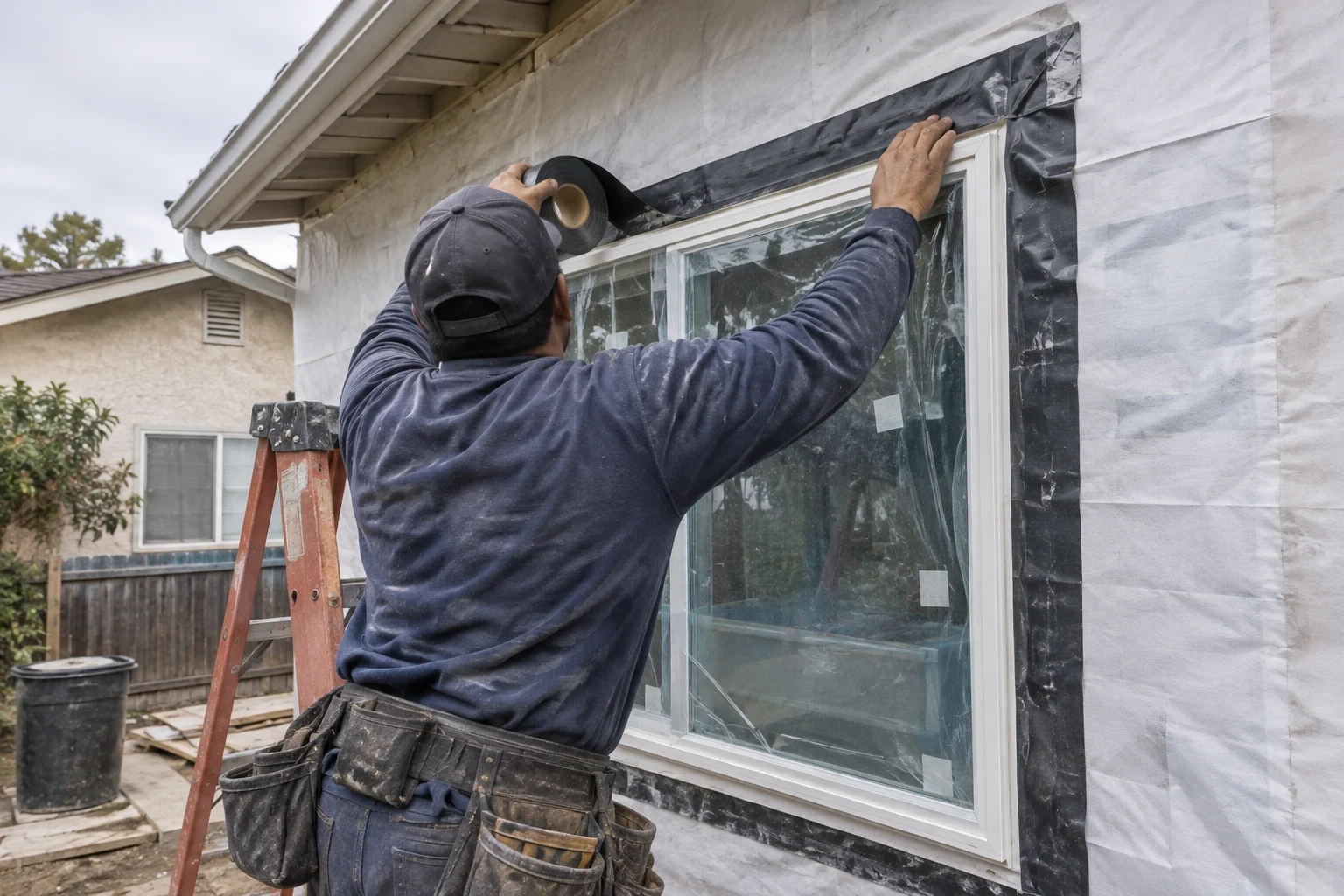
Window installation is not the same job as a retrofit. A retrofit sets a new frame inside the old one. Installation strips the opening down to bare framing, or cuts a new one, and sets the window with a nailing fin or block frame against the studs. It fits room additions, remodels that move or widen an opening, and old frames with rot or water damage hidden behind them.
Our work starts with finding the cause. If a window has leaked, we trace whether it came through the glass seal, a frame corner, a failed sill or missing flashing behind the stucco. A new window set into the same flaw leaks the same way. Many homes in Cerritos still have original aluminum sliders nailed straight into stucco, and the building paper behind them is often brittle and torn.
We are CSLB C-17 licensed, the state classification for glazing work, and our installers bring 30 years of window installation experience to every opening we open up.
What our installation work includes
- 01
Rough opening check
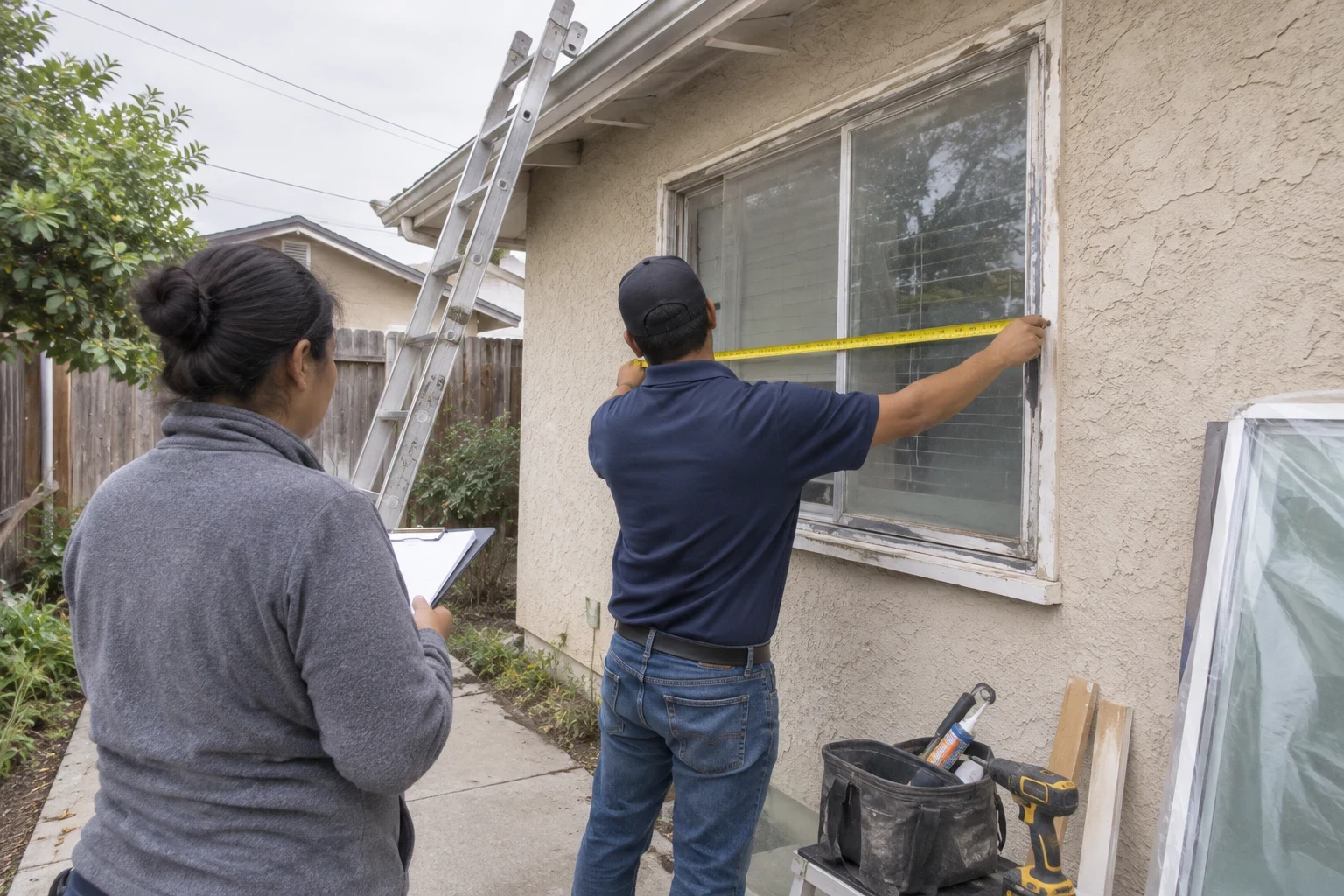
We measure the opening at the top, middle and bottom, check it for square and level, and probe the sill and jack studs for soft wood. The window is ordered from those numbers, not from the size of the old frame.
- 02
Stucco cutback and patch
For a nail-fin install in a stucco wall, we cut back a band of stucco around the opening so the fin and flashing tie into the weather barrier. Afterward we patch and texture that band so it is ready for paint.
- 03
Sill pan and flashing
A sloped sill pan or flexible flashing goes in first. Side and head flashing are lapped shingle-style over it, so any water that gets behind the stucco is directed back out.
- 04
Setting and insulating
Each window is shimmed at the jambs, checked for plumb and equal diagonals, and fastened to the manufacturer's instructions. Gaps get low-expansion foam, which fills the space without bowing the frame and binding the sash.
- 05
Code items handled
We spec tempered glass where code requires it, such as beside doors and over tubs, and size bedroom windows for egress. When the job needs a permit, we pull it.
- 06
Cleanup and walkthrough
We haul away the old frames and debris, operate every sash and lock with you, and show you photos of each opening before it was closed up.
Questions about Window Installation?
Call(562) 837-0159Signs you need full installation, not a retrofit
Soft or dark wood at the sill
This means water has been getting past the frame for a while. A retrofit insert would cover the damage instead of fixing it.
Stains on the wall below a window
Streaks or bubbling paint under a window usually point to a leak path behind the stucco or at the sill. The flashing has to be rebuilt, and that means taking the frame out.
A bent or racked frame
Old aluminum frames can twist out of square, so the sash drags or won't lock. An insert follows the shape of the frame it sits in, so it inherits the problem.
A new or resized opening
Adding a window, widening one or lowering a sill for egress always calls for full installation, often with a new header above the opening.
Other wall work already underway
If the stucco or siding is being redone anyway, it is the cheapest time to do full-frame installs with proper flashing.
How an installation job runs
- 1
Free in-home estimate
We offer free in-home estimates with no sales pressure or obligation. We measure each opening, look for signs of water damage and tell you plainly whether it needs full installation or a retrofit would do.
- 2
Order and permit
Windows are built to the measured size, so we order after you approve the written quote. If the work needs a permit, we file for it while the windows are being made.
- 3
Removal and opening prep
We cover floors and furniture near each opening, remove the old window and inspect the framing. If we find rot, we photograph it and talk it through with you before doing anything beyond the quote.
- 4
Set, flash and seal
The sill pan goes in, the window is set and fastened, and the flashing is lapped in order. Then we foam the gaps, patch the stucco and seal the interior trim.
- 5
Final check
We test each sash, clean the glass, clear the debris and schedule any required inspection.
What moves the price of window installation
Full installation costs more per opening than a retrofit because there is more work inside the wall. Your quote lists each opening and what it needs, so you can see where the cost comes from. If we find damaged framing once a window is out, we show you before any extra work starts.
- Window size and glass
- Larger units, tempered glass and higher-performance dual-pane glass all raise the cost of the window itself.
- Wall finish
- Stucco needs a cutback and patch around each opening. Wood or fiber cement siding is handled differently and usually takes less finish work.
- Condition of the framing
- Sound framing goes straight to flashing. Rotted sills or studs have to be replaced first.
- New or enlarged openings
- Cutting a new opening adds a header, extra framing, interior drywall work and usually a permit.
- Count and access
- Several windows done in one visit spread the setup time. Second-story openings that need ladders or scaffolding take longer.
Window installation questions
How do I know if I need installation or a retrofit?
It depends on what is behind the old frame. If the framing is dry and the opening is square, a retrofit is often fine and costs less. If there is rot, a leak history or a racked frame, full installation is the honest answer. We check for these things at the estimate and explain what we found.
Will you have to cut into my stucco?
For a nail-fin install, yes. We cut a narrow band around the opening so the new flashing can tie into the weather barrier. We patch and texture it afterward, and it will need paint to match the rest of the wall.
Do I need a permit for new windows?
New openings, enlarged openings and structural changes generally need one, and some full-frame jobs do too. We pull the permit when the work calls for it and handle the inspection scheduling.
How long does one window take?
A standard opening in sound framing usually takes a few hours, including the stucco patch. Openings with rotted framing or a new header take longer. We give you a realistic schedule for your job at the estimate.
Can you beat a quote I already have?
Yes. We'll beat any estimate from another contractor with a valid CSLB number or from a USA-made window supplier. Have your other quote handy when you call so we can compare the same windows and the same scope of work.
How long have you been installing windows?
The company has been in business for 12 years, and we bring 30 years of window installation experience to each job. That time shows up in the details, like how the sill pan and flashing are lapped.
Start with a close look at your openings
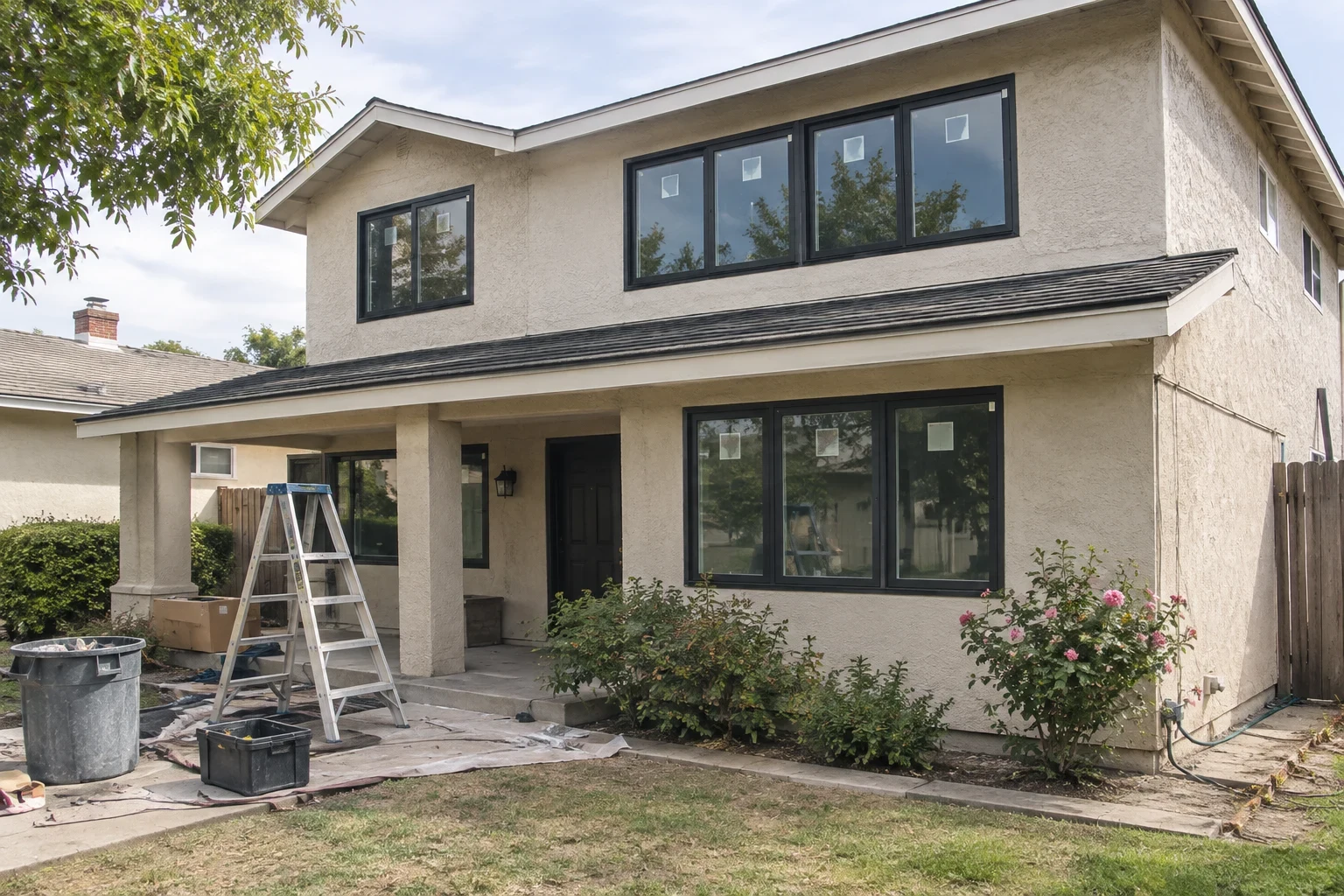
We'll measure, check the framing and tell you whether full installation or a retrofit is right for your home. We work in Cerritos and nearby cities including Artesia, Norwalk and Lakewood.